


As you explore the city of Pécs today, you will encounter traces of different historical periods at every turn. Among the most interesting — and somewhat lesser-known — remnants of this past are the ruins of Pasha Memi’s Bath (Memi pasa fürdője), located right next to the Franciscan Church.
They represent one of the few preserved examples of Ottoman baths in the city — a quiet yet highly expressive reminder of the time when Pécs was part of the Ottoman Empire.
Pécs During the Ottoman Empire
In the 16th and 17th centuries, Pécs was an important Ottoman center in what is now Hungary. During this period, the city was significantly transformed — mosques, schools (medreses), dervish monasteries, and public baths (hammams) were built.
Baths were not only places for hygiene, but also for socializing, relaxation, and daily rituals. In Islamic culture, they played an important role in maintaining both physical and spiritual cleanliness.
Pasha Memi’s Bath – What Did It Look Like?
The bath, which today survives only as ruins, was built in the 16th century and once played an important role in the daily life of the city. Based on archaeological research, it is believed to have been a relatively large and well-designed structure.
The preserved remains reveal:
- massive stone walls
- the layout of a central hall (most likely covered by a dome)
- traces of an underfloor heating system (hypocaust)
- a spatial organization typical of Turkish baths
Such baths usually included multiple rooms with different temperatures — from cold to hot — as well as areas for rest and relaxation.
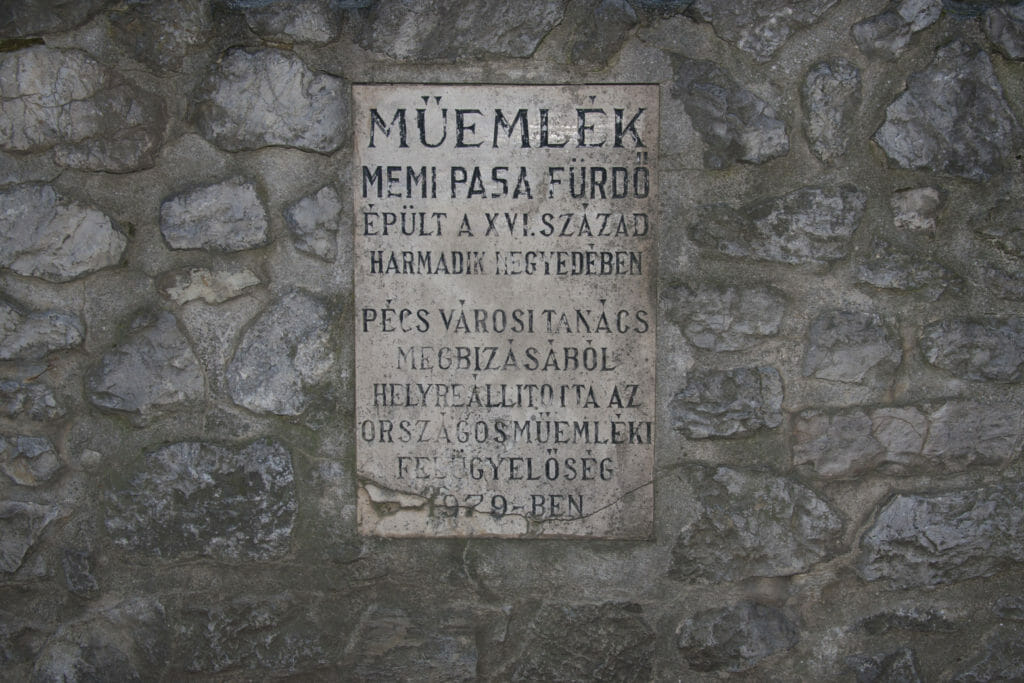
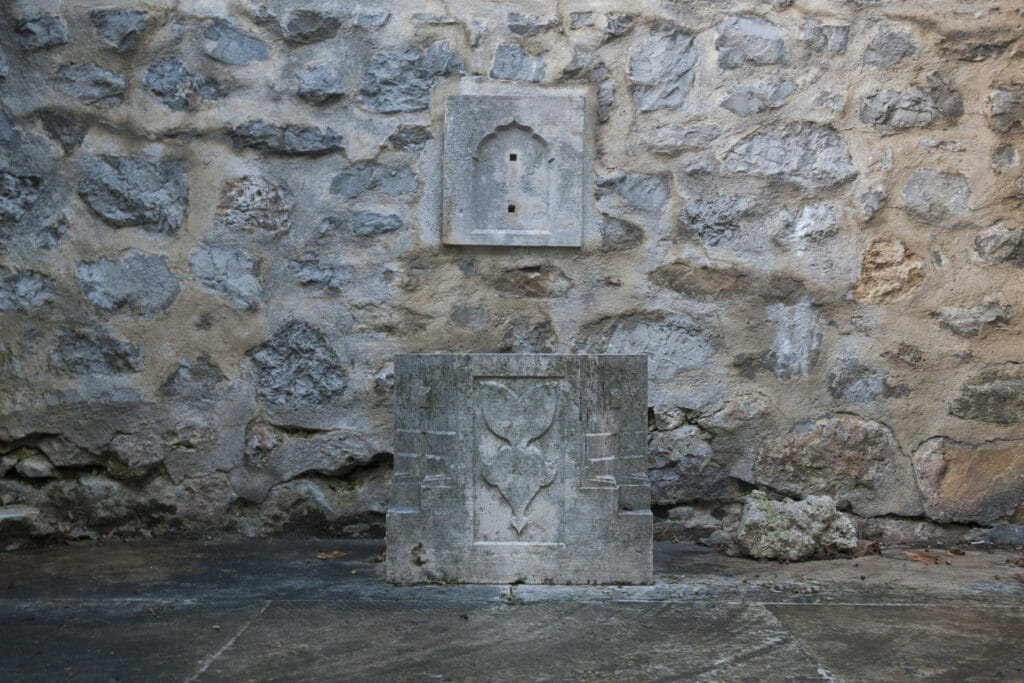
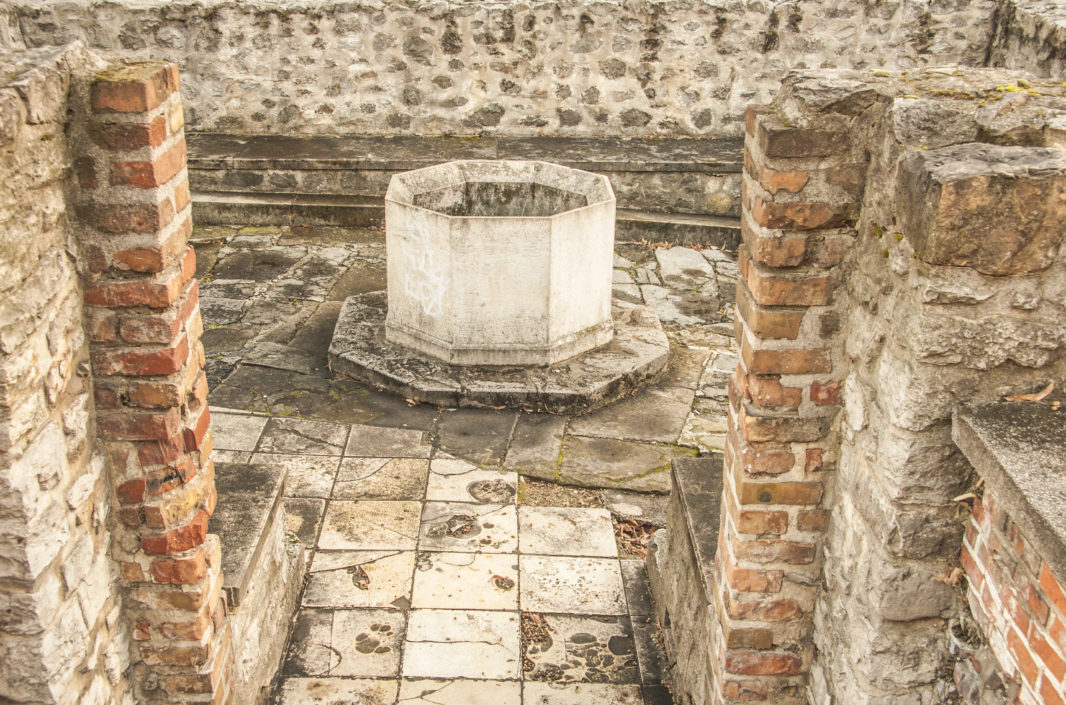
Although the dome has not survived, the foundations and walls still allow visitors to imagine the former grandeur of the building.
Part of a Larger Ottoman Complex
Historical sources suggest that Pasha Memi’s Bath was not a standalone structure, but part of a larger complex. Nearby, there were also educational institutions and religious buildings.
Interestingly, today’s Franciscan Church was converted into a mosque during Ottoman rule, which means that the church and the bath once formed part of a connected urban space.
This close proximity of a Christian and an Islamic monument offers a unique insight into the layered history of the city of Pécs.
From Grandeur to Ruins
Over the centuries, the bath gradually fell into decay. After the end of Ottoman rule, it lost its original function and eventually became a ruin. Nevertheless, many parts of the structure have survived to this day.
Today, the ruins are partially reconstructed and protected as a cultural monument. Although the building is not fully preserved, it is precisely this “unfinished” appearance that allows visitors to feel the authenticity of history as they walk through it.
RUINS OF PASHA MEMI’S BATH
Hungarian name: Memi pasa fürdője
Address: Pécs, Ferencesek utcája
Opening hours: Always open.
Admission: Free.
