


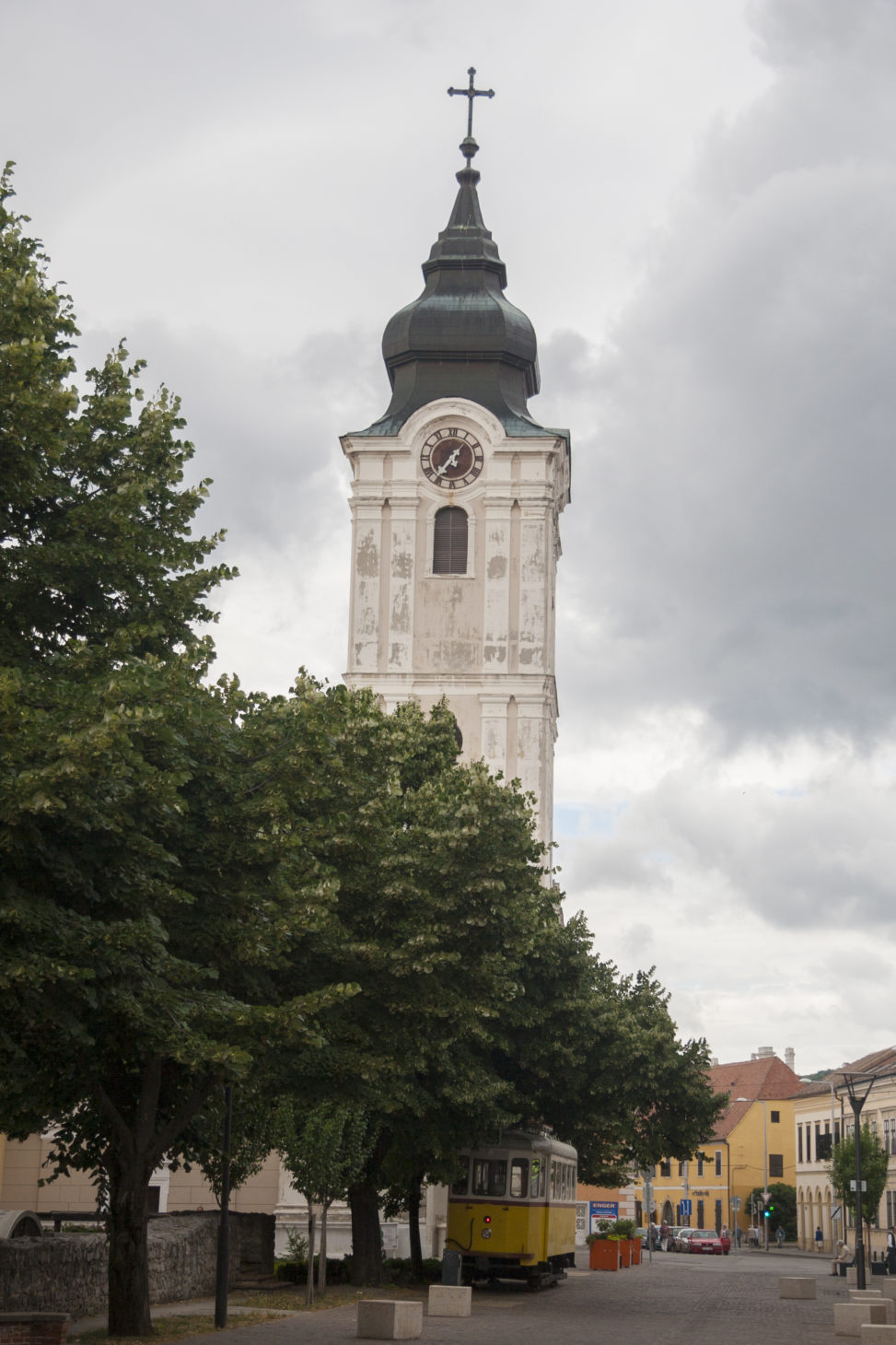
While walking through the old town of Pécs, you will almost certainly come across the Franciscan Church (Hungarian: Ferences templom). Although it is not considered the most famous landmark of Pécs, Hungary, it has a remarkably interesting history — mainly because of its location next to Ottoman remains and the city’s iconic yellow tram.
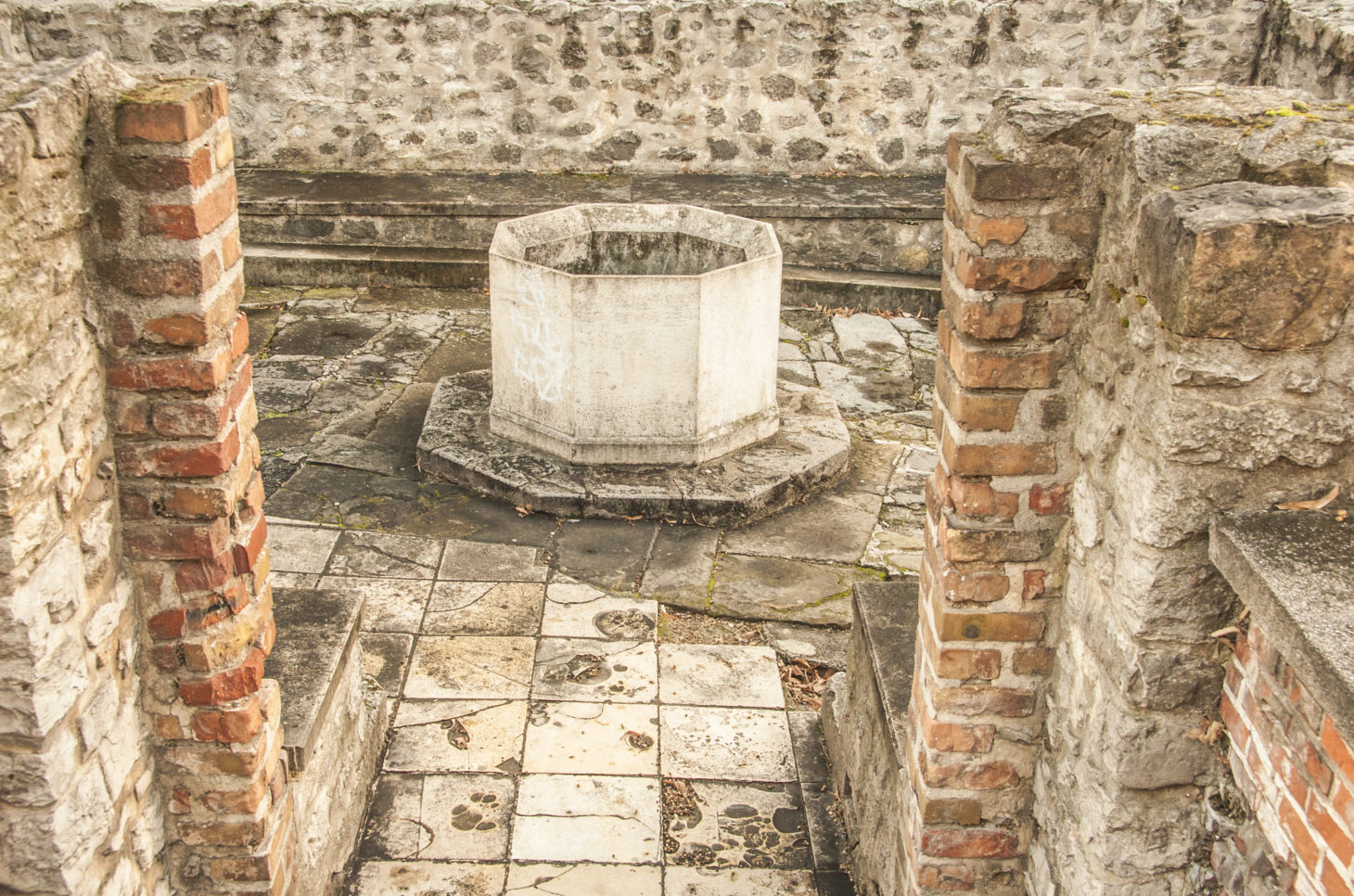
The church stands in the immediate vicinity of the remains of Memi Pasha Bath, one of the few preserved Turkish baths in the city, which gives it a particularly rich historical context.
From a Medieval Church to a Baroque Sanctuary
A church already stood on the site of today’s Franciscan Church in the Middle Ages. During Ottoman rule (16th–17th centuries), it was converted into a mosque — a common fate for many church buildings in Pécs at the time.
After the Ottomans withdrew at the end of the 17th century, the Franciscans took over the area and have been active there ever since. When they regained the building, it was in poor condition and required extensive renovation. In the 18th century, the church acquired its distinct Baroque appearance, which it largely preserves to this day.
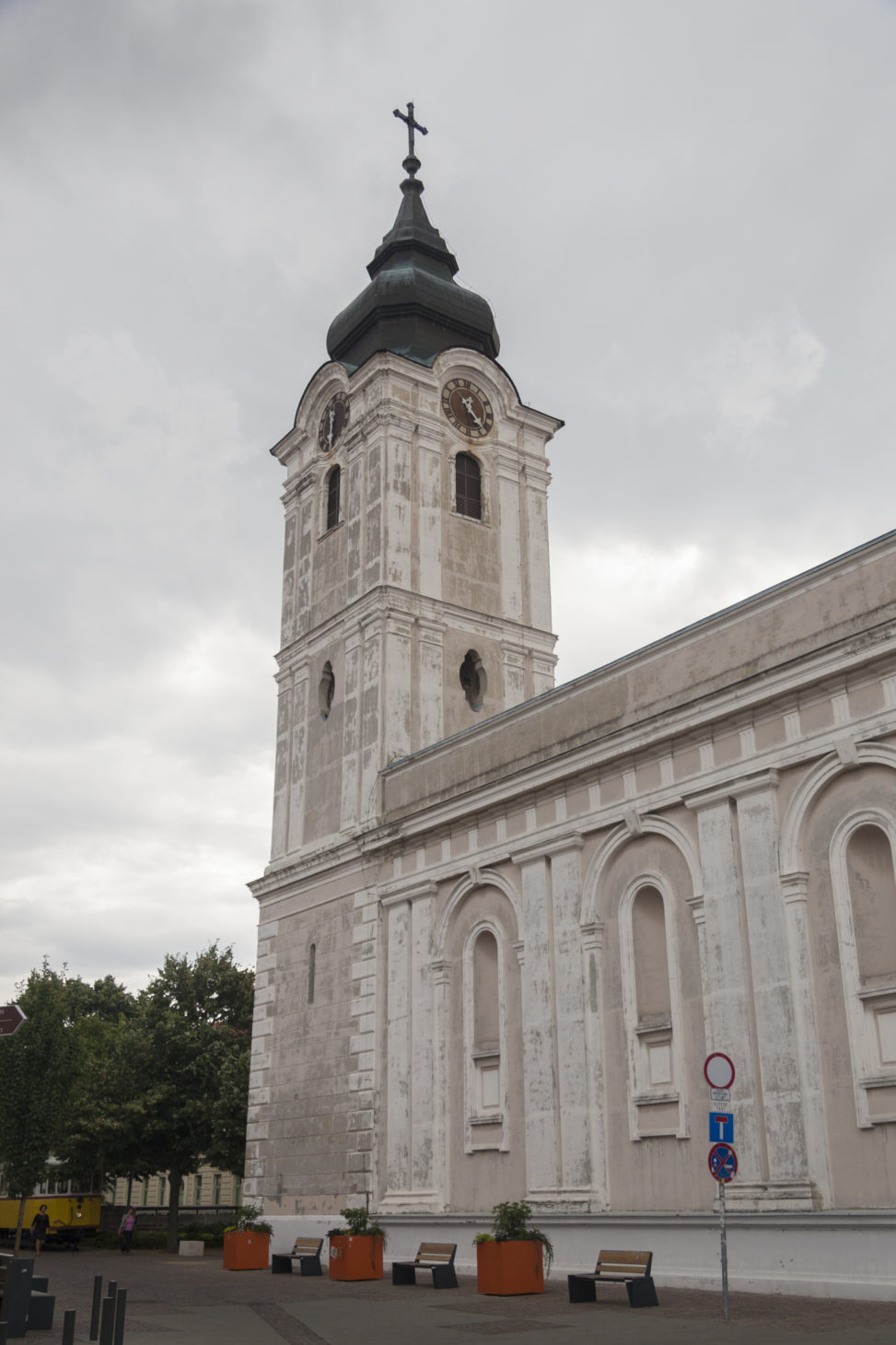
The current exterior is mainly the result of Baroque reconstruction, with a significant restoration carried out in 1925. Despite later modifications, the characteristic Baroque bell tower and several historic architectural elements have been preserved.
Interior: Baroque Elegance and Art
The Franciscan Church in Pécs is considered one of the most beautiful Baroque sacred interiors in the city. The interior features:
- richly decorated Baroque furnishings
- an 18th-century altar
- an altarpiece depicting a scene from the life of Saint Francis of Assisi
- decorative stucco work and detailed ornamentation
The church has a particularly charming atmosphere during Advent, when the interior is adorned with a wooden nativity scene featuring life-size figures — one of the most beautiful holiday traditions in the city.
Ottoman Heritage Right Next to the Church
Directly beside the Franciscan Church, you can see the remains of Memi Pasha’s Bath. The bath was built in the 16th century during Ottoman rule and represents an important monument of Turkish heritage in Pécs.
The close proximity of the Baroque church and the Ottoman bath at the same location symbolizes the layered history of the city of Pécs in Hungary — a place where Christian and Islamic heritage intertwine.
The Mysterious Yellow Tram
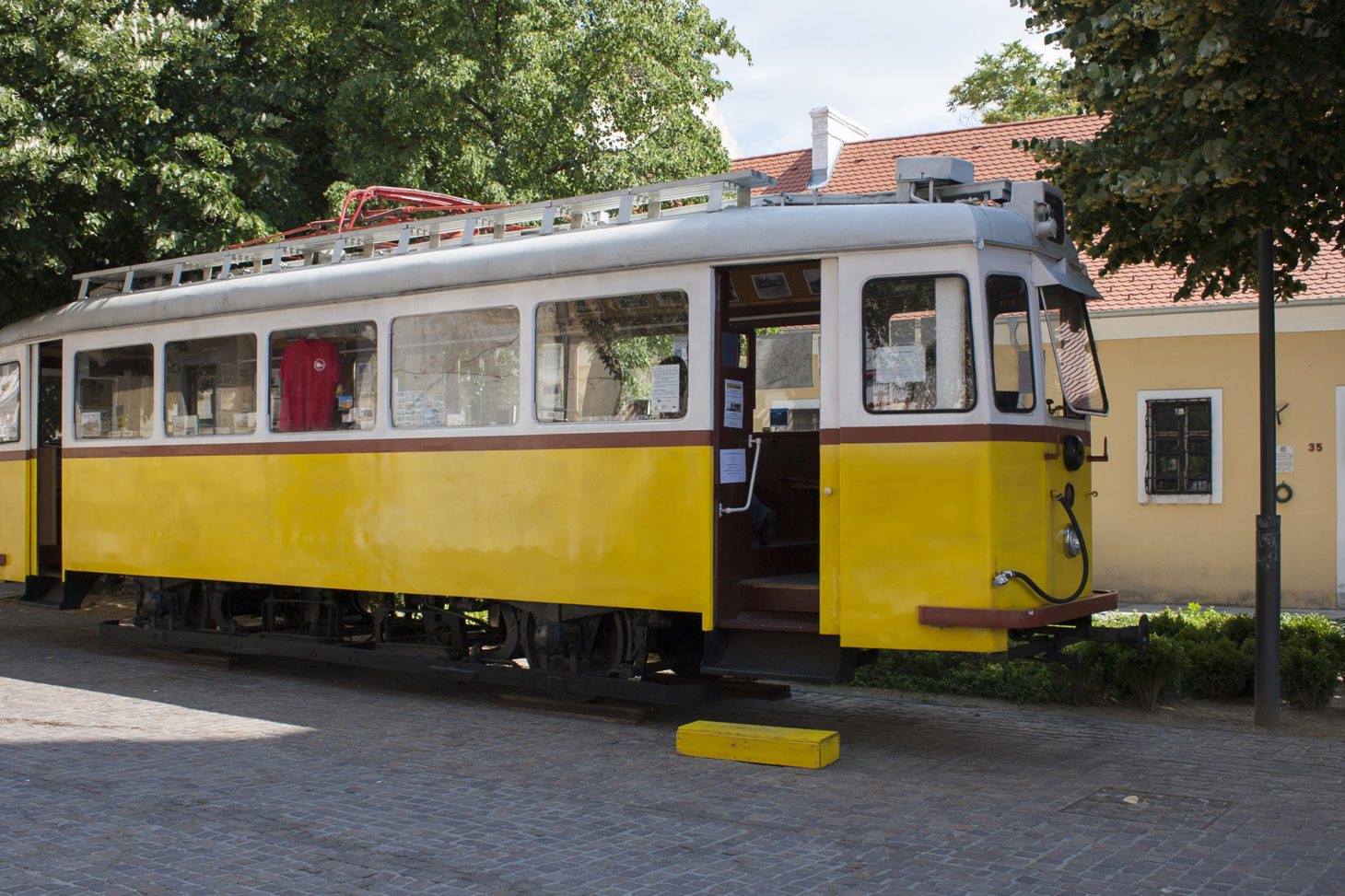
In front of the church, you will often see the unmistakable yellow tram — a reminder of the time when Pécs was one of the more modern cities in the region. The tram began operating in 1913 and connected important parts of the city, including Széchenyi Square, the railway station, and the Zsolnay factory.
Tram service ended in 1960 and was replaced by buses. Since the original city tram cars were not preserved, a local enthusiasts’ association acquired an old Budapest tram car, which today stands as a symbol of the city’s transport history. It functions as a small exhibition space and commemorative landmark.
FRANCISCAN CHURCH
Address: Pécs, Ferencesek utcája
Opening hours: The church is open almost all the time. Mass is held from Monday to Saturday at 7:15 and 17:00, and on Sundays at 8:00, 9:30, 11:00, and 17:00.
Admission: Free.
